The Short Answer
Level 1 charging uses a standard 120-volt outlet and adds roughly 3–5 miles of range per hour. Level 2 uses a dedicated 240-volt circuit and adds roughly 20–40+ miles per hour. Level 1 can be enough for plug-in hybrids and short commutes. Most fully electric vehicle owners who charge at home every night are better served by Level 2.
Level 2 is the most common reason Reynoldsburg drivers look into EV charger installation. Before you commit, it's worth checking whether your own driving actually needs it.
Side-by-Side Comparison
| Level 1 | Level 2 | |
|---|---|---|
| Voltage | 120V (standard outlet) | 240V (dedicated circuit) |
| Typical power | About 1.2–1.9 kW | About 5.8–11.5 kW |
| Range added per hour | About 3–5 miles | About 20–40+ miles |
| Equipment | Cord that came with the car | Wall-mounted charger or NEMA 14-50 plug-in unit |
| Installation | None if a suitable outlet exists | New circuit, permit and inspection |
| Best for | Plug-in hybrids, low daily mileage | Full EVs, longer commutes, two-EV households |
Figures are approximate. Actual speed depends on your vehicle's efficiency and onboard charger, the charger's setting and the temperature.
Do the Math for Your Own Driving
A quick way to decide: compare the energy you use each day with what each level can replace overnight.
- Estimate daily miles. Use a typical weekday, plus your longest regular day.
- Convert to energy. Many EVs travel roughly 3–4 miles per kWh in mild weather. At 3.5 mi/kWh, 40 miles uses about 11–12 kWh.
- Compare to your parked hours. Level 1 at about 1.4 kW needs roughly 8 hours to replace 11–12 kWh. Level 2 at about 7.7 kW needs about 1.5 hours.
If Level 1 can replace your daily use within the hours you're parked, with a margin to spare, you may not need Level 2 yet. If it's close, or you often come home late and leave early, Level 2 removes the guesswork.
Why Ohio Winters Matter
Cold weather hurts Level 1 charging most. In freezing temperatures, EVs use more energy per mile for cabin and battery heating, and some of the incoming charging power goes to warming the battery before it can charge efficiently. With only 1.2–1.9 kW available, a larger share of Level 1 power is spent on heating. That's why drivers who manage fine on Level 1 in September often find it falling short in January.
Level 2's extra power covers both battery warming and charging, and it lets you precondition the cabin while plugged in without draining range.
When Level 1 Is Honestly Enough
- You drive a plug-in hybrid with a small battery.
- Your daily round trip is short and you're parked 10+ hours overnight.
- You can charge at work or regularly use public Level 2 charging.
- You're renting and can't install a circuit yet. Make sure the outlet is on a circuit that isn't shared with other heavy loads.
Level 1 still draws a steady 12 amps for hours. Plug directly into a good-condition outlet (never an extension cord), and have an electrician look at any outlet that gets warm.
What Moving to Level 2 Involves
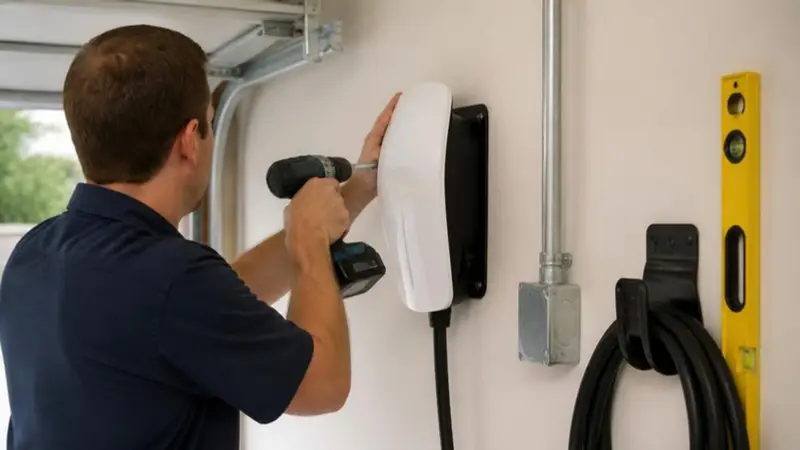
Going to Level 2 means adding a dedicated 240-volt circuit, either hardwired to a wall charger or to a NEMA 14-50 outlet. Compare the two in our NEMA 14-50 vs. hardwired guide, and size the circuit using our breaker size guide. If you drive a Tesla, see Tesla Wall Connector installation. For everyone else, the Level 2 home charger installation page walks through the full process.