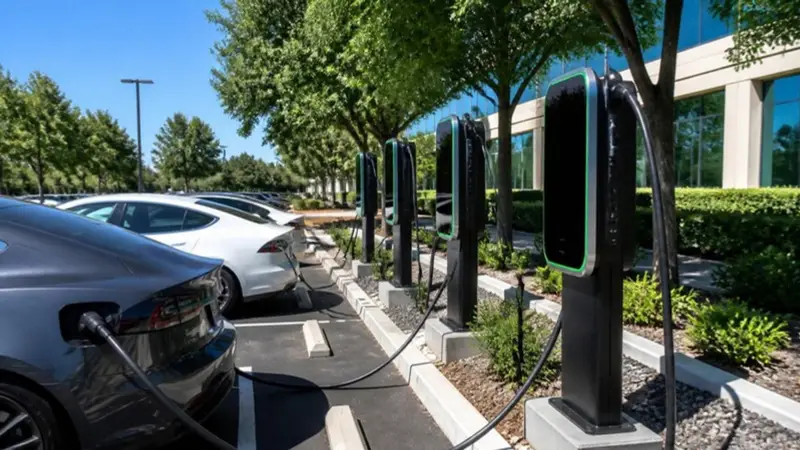
What Is Commercial EV Charging Installation?
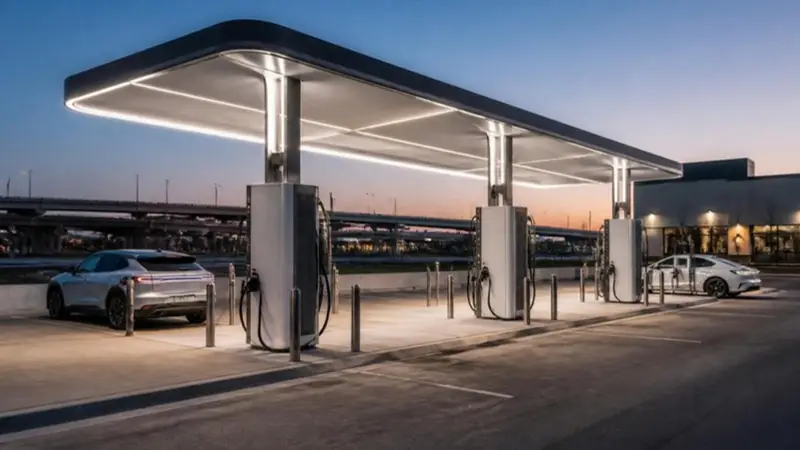
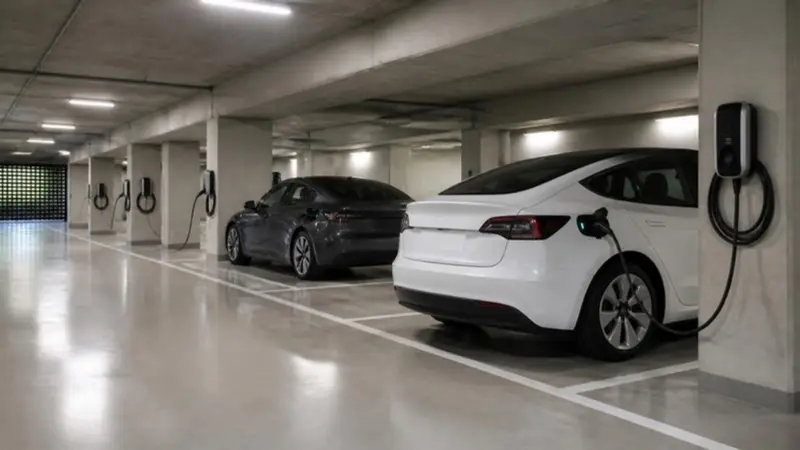
Commercial EV charging installation is the design and construction of charging stations at a business property: electrical capacity planning, trenching and conduit, concrete pads or bollards, station mounting, and, for most sites, networking software that controls access, pricing and power sharing. Most workplaces and retail sites use Level 2 stations. DC fast chargers are reserved for short-stay, high-turnover locations.
It's a different project from a home installation. A commercial job can involve multiple circuits or a new distribution panel, parking layout changes, accessibility planning, and sometimes utility service upgrades. It sits alongside home installations as part of the EV charger installation services available in Reynoldsburg.
Who Installs Commercial Level 2 Charging
Workplaces and offices
Employee charging during the workday, sometimes free as a benefit and sometimes paid through a network.
Retail and restaurants
Charging that encourages longer visits. Short stays may call for faster chargers.
Medical and professional offices
Patient and staff charging where parking stays run an hour or more.
Hotels and lodging
Overnight guest charging, which many EV drivers look for when booking.
Churches, schools and nonprofits
Staff and community charging, often with scheduled access.
Apartment and HOA properties
Covered in detail on our multi-family charging page.
Planning Questions to Answer First
- Who will charge, and for how long? Dwell time decides whether Level 2 is enough.
- How many ports now, and how many later? Installing extra conduit during the first trenching job is much cheaper than digging again.
- Free, paid or restricted? This determines whether you need networked stations and access control.
- How much electrical capacity is available? A load study of the building service may show room for several stations, especially with power sharing.
- Where will stations go? Close to the electrical room keeps runs short. Visibility and accessibility matter for customer-facing charging.
Trenching, Conduit and Site Work
Getting power from the building to the parking area is often the largest part of a commercial installation. Contractors use open trenching, saw-cutting and patching asphalt or concrete, or directional boring to run conduit under drive lanes without tearing them up. Stations are mounted on walls, on pedestals set in concrete footings, or on bollard-protected islands. Before any digging, Ohio's One-Call system (OHIO811) must be contacted to locate underground utilities. Your contractor handles this.
Laying spare conduit to future station locations during the first project is one of the most cost-effective decisions a property owner can make.
Charger Software and Network Setup
Networked commercial chargers connect to a cloud platform over cellular or Wi-Fi. The network lets you:
- Set pricing (per kWh where allowed, per hour or per session) or offer free charging
- Restrict access to employees, tenants or fleet vehicles with RFID cards or an app
- Share limited electrical capacity across many ports
- View usage reports and receive alerts when a station goes offline
- List stations on public charging maps so drivers can find you
Networks usually carry a recurring subscription per port. During installation, the contractor or network provider activates each station, confirms connectivity at the parking spot (cellular signal in garages can be weak), and configures access and pricing. If you already own networked stations that won't connect, see EV charger repair and troubleshooting.
Permits and Codes for Reynoldsburg Businesses
Commercial projects generally need electrical plans and permits through the building department with jurisdiction. For properties inside city limits, that's the City of Reynoldsburg Building Department, which also requires contractors working in the city to register. Parking layout changes, signage and accessibility can add review steps, and properties in Gahanna, New Albany and other neighboring cities follow their own processes. Accessibility is a real design consideration too. The U.S. Access Board has published guidance on accessible EV charging spaces.
What Drives Commercial Installation Cost
The main variables are the number of ports, the distance from the electrical room to the parking area, surface restoration (asphalt, concrete, landscaping), whether the building service needs a new panel, transformer or upgrade, station hardware and pedestals, and ongoing network fees. Ask for a quote that separates hardware, electrical work, site work and software so you can compare bids accurately. The federal 30C credit does not apply to equipment placed in service after June 30, 2026, so budget without it unless your tax professional advises otherwise. See our 2026 incentives update.
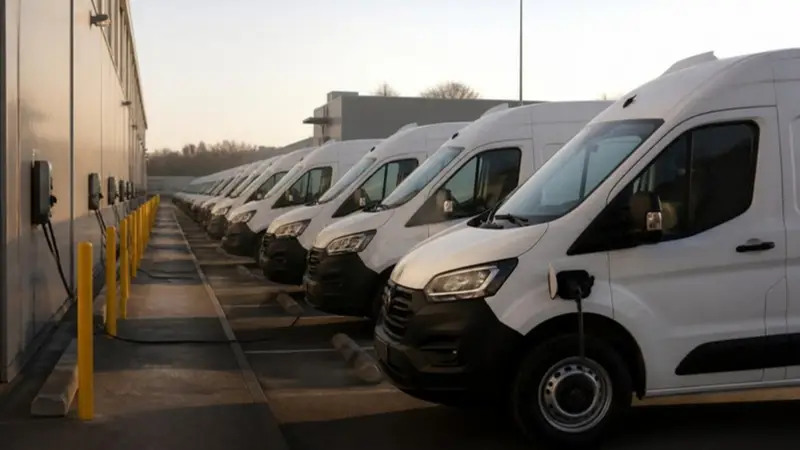
Planning charging for company vehicles rather than visitors? Fleet projects have different priorities. See EV fleet charging infrastructure. For residential options and local context, visit our main page on EV charger installation in the Reynoldsburg area.