
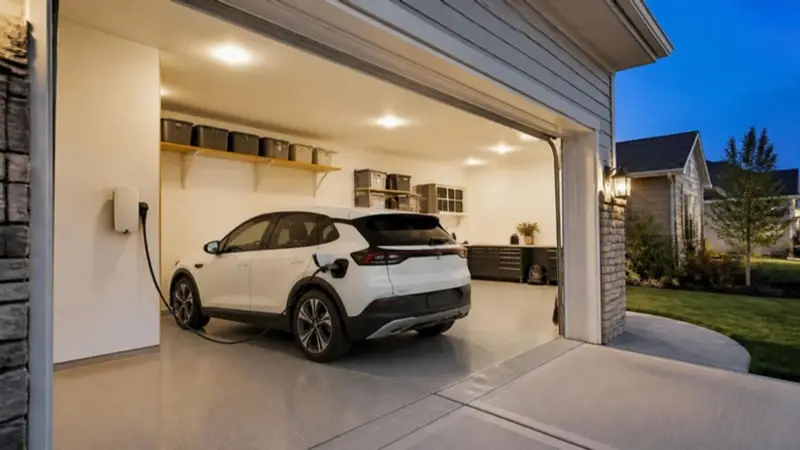
EV Charger Installation in Reynoldsburg, OH
Level 2 home chargers, Tesla Wall Connectors, panel upgrades and commercial charging stations, installed by local electricians who work in Reynoldsburg and the surrounding east-side communities.
- Level 2 & Tesla chargers
- Panel upgrades
- Commercial & fleet
- Charger repair
- Home chargingGarages, driveways & outbuildings
- Commercial chargingWorkplaces, retail, fleets & HOAs
- Electrical upgradesPanels, subpanels & load management
- Local service areaReynoldsburg + 5 nearby communities
What Does EV Charger Installation Involve?
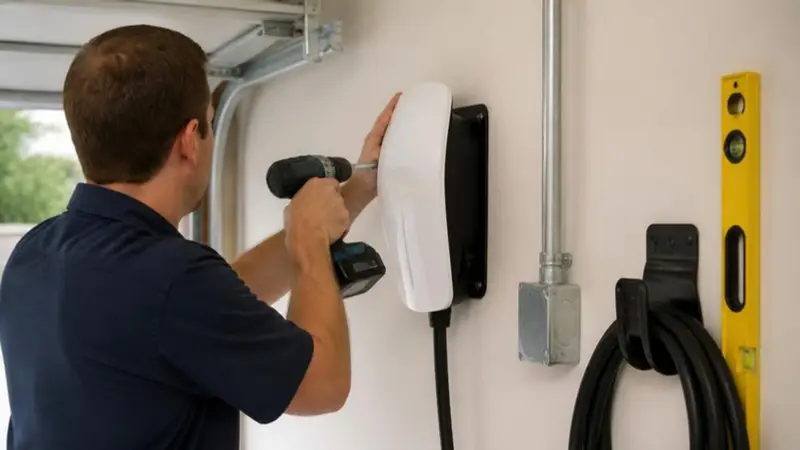
Short answer: For most Reynoldsburg homes, it means running a dedicated 240-volt circuit from your electrical panel to a Level 2 charger in the garage or on an exterior wall. The breaker and wire are sized to the charger's output, the unit is mounted and commissioned, and the work is permitted and inspected.
The charger is only part of the job. What decides how simple an installation will be is the electrical path: spare capacity in your service, room in the panel for a two-pole breaker, and the distance and obstacles between the panel and the charger.
Most homeowners choose a Level 2 home charger installation, hardwired or on a NEMA 14-50 outlet. Tesla owners often prefer the Tesla Wall Connector. Older 100-amp services or full panels may call for a panel upgrade or smart load management. Businesses usually start with commercial Level 2 stations, fleet charging or, for short-stay sites, DC fast chargers.
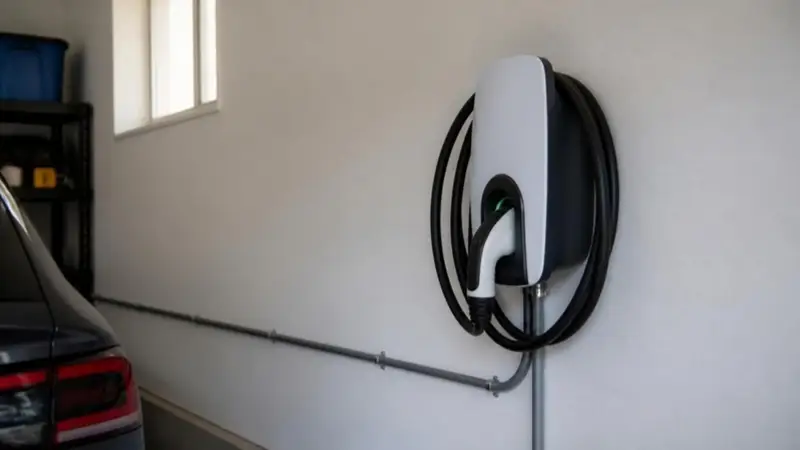
EV Charging Services in Reynoldsburg
From a single garage charger to a fleet depot, each guide explains what the work involves, what drives cost and what to ask before you hire.
Level 2 Home Charger Installation
Dedicated 240-volt circuits and hardwired or plug-in Level 2 chargers for garages and driveways, including J1772 and NACS units.
Learn more →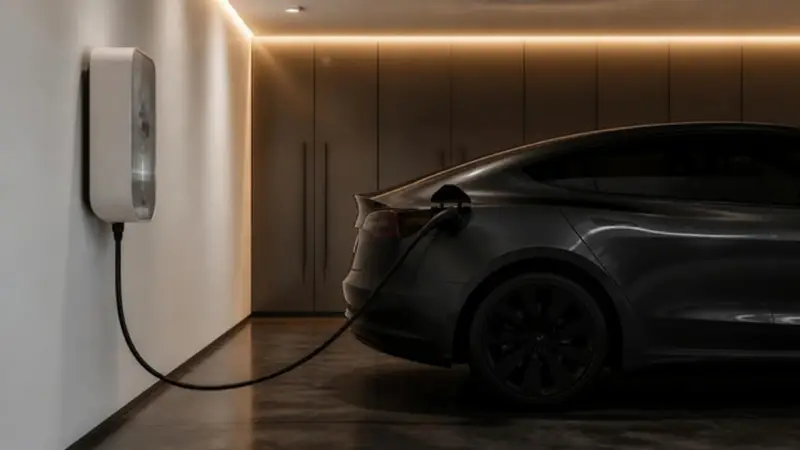
Tesla Wall Connector Installation
Correct breaker sizing, Wi-Fi setup and power sharing for Tesla Wall Connector and Universal Wall Connector units.
Learn more →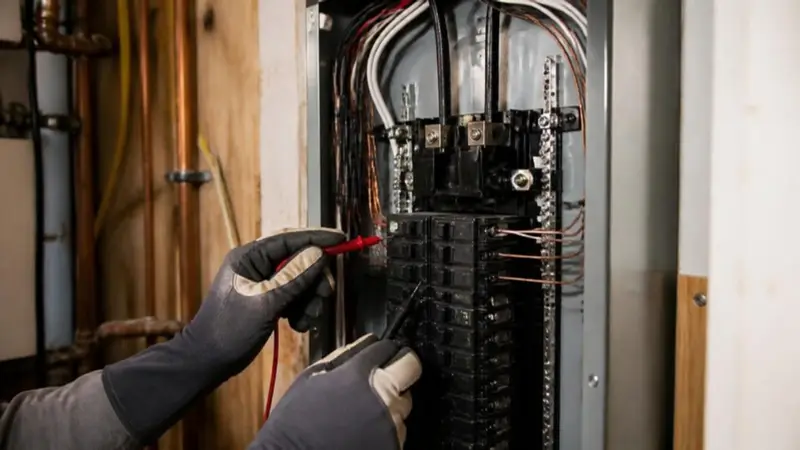
Panel Upgrades & Load Management
Load calculations, 200-amp service upgrades and smart load management when your panel is near capacity.
Learn more →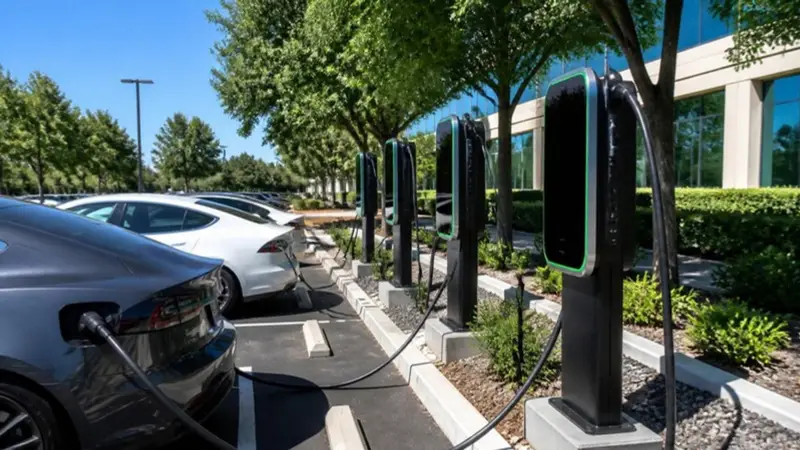
Commercial EV Charging Stations
Networked Level 2 stations for workplaces, retail lots and medical offices, including trenching and software setup.
Learn more →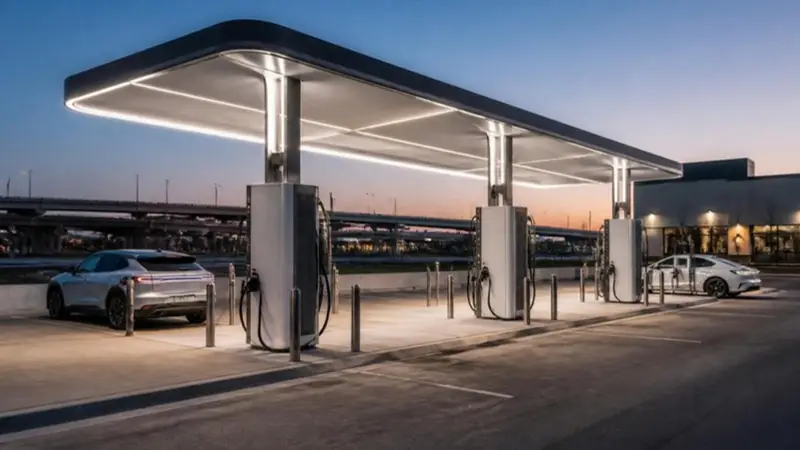
DC Fast Charger (Level 3) Installation
Three-phase power planning, utility coordination and site work for public or fleet DC fast charging.
Learn more →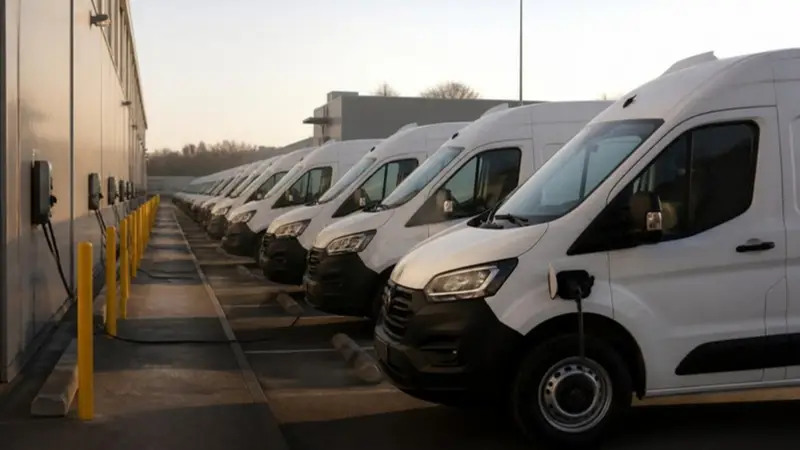
EV Fleet Charging Infrastructure
Depot charging designed around duty cycles, dwell times and future vehicle counts for work vans and trucks.
Learn more →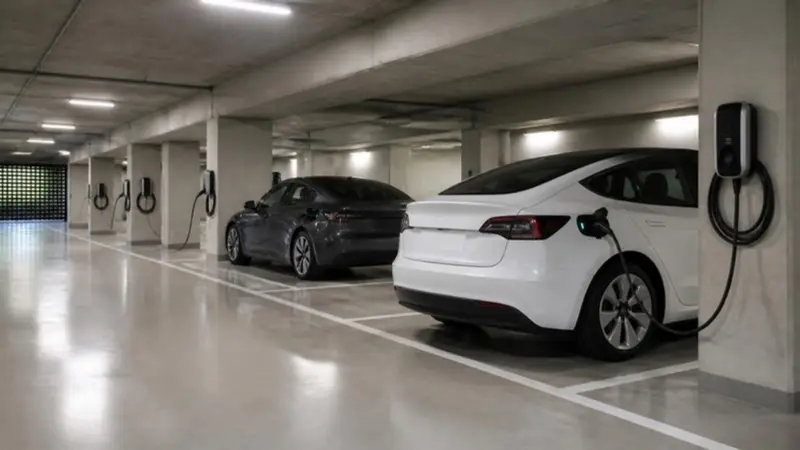
Apartment, Condo & HOA Charging
Shared and assigned parking charging for apartments, condos and HOAs, with billing and load planning.
Learn more →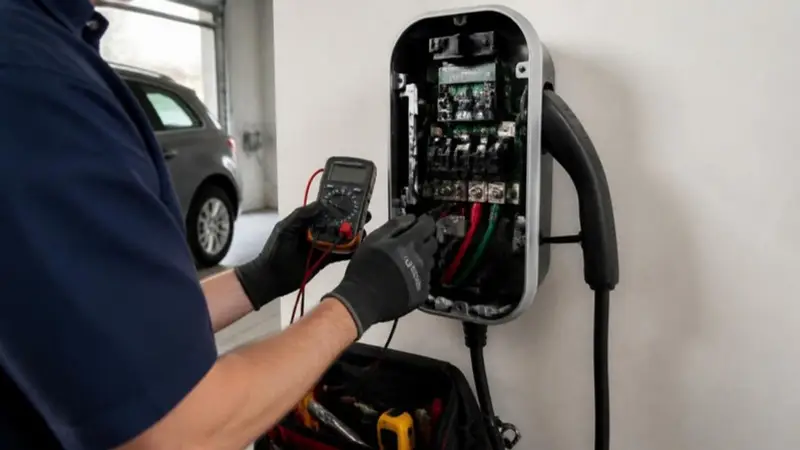
EV Charger Repair & Maintenance
Troubleshooting tripping breakers, fault lights, network errors and worn connectors, plus routine maintenance.
Learn more →From First Call to First Charge
A straightforward process, whether it's one garage charger or a parking lot full of stations.
- Call (614) 304-9633Tell us your address, vehicle, where you park and anything you know about your electrical panel.
- Talk with a local installerA local EV charger installer reviews the job, often from panel photos, or schedules a site visit.
- Get a written quoteScope, charger, circuit size, permit fees and warranty terms in writing before work starts.
- Install & inspectThe circuit and charger are installed, the permit is closed out with inspection, and you're charging.
Level 1 vs. Level 2 vs. DC Fast Charging
The three levels differ in voltage, speed and where they make sense. For almost every Reynoldsburg household, Level 2 is the practical choice: it restores a typical day of driving in a few hours overnight. DC fast chargers are commercial equipment and aren't installed at homes.
Range-per-hour figures are approximate and vary by vehicle, charger output and conditions.
| Level | Power | Range added |
|---|---|---|
| Level 1 | Standard 120V outlet | About 3–5 mi per hour |
| Level 2 | Dedicated 240V circuit (commonly 40–60A) | About 20–40+ mi per hour |
| DC fast | Three-phase commercial power, often 480V | Much of a charge in under an hour |
What Reynoldsburg Drivers Call About
"The 120V cord isn't keeping up."
The most common reason people call. A Level 2 circuit fixes it, often in a single visit. See the Level 2 installation guide.
"My panel is full" or "I have 100-amp service."
That doesn't automatically mean a full upgrade. A subpanel, lower charger setting or load management may work. See panel options.
"We have two EVs."
Two chargers don't always need two full-size circuits. Many chargers, including Tesla Wall Connectors, can share one circuit.
"Tenants and residents want charging."
Property managers and HOA boards need a plan for costs, billing and capacity. Read the multi-family and HOA guide.
"Our business wants chargers."
Workplace and customer charging starts with dwell time, port count and available power. See commercial charging stations.
"My charger stopped working."
Tripping breakers, fault lights and offline chargers deserve a professional look. See EV charger repair.
What Affects the Cost of EV Charger Installation?
Cost is driven mainly by wire run length and routing, available panel capacity, the charger's amperage, and permit and inspection fees. The charger hardware is usually a separate line item.
Every home is wired differently, so a reliable price comes from an installer who has seen your setup. Photos of your panel label, main breaker and the planned charger spot usually speed up the quote.
| Factor | Why it matters |
|---|---|
| Distance from panel | Longer runs need more wire, and sometimes larger wire to limit voltage drop. |
| Wall & ceiling access | Unfinished spaces are faster to route through than finished drywall. |
| Panel capacity | A full panel or small service may add a subpanel, load management or an upgrade. |
| Charger amperage | A 48A charger needs a 60A circuit and heavier wire than a 32A charger. |
| Indoor vs. outdoor | Exterior mounting needs weather-rated fittings. Detached garages may need trenching. |
| Permits | Required for new circuits in most Ohio jurisdictions. Fees vary by department. |
Permits, Utilities and Codes in Reynoldsburg
The local details that shape an EV charger installation in Reynoldsburg and nearby communities.
Permits
Inside city limits, the City of Reynoldsburg Building Department issues electrical permits. Reynoldsburg spans Franklin, Licking and Fairfield counties, and nearby addresses may fall under a township or another city, so the permit office depends on the parcel, not the mailing address.
Code basics
EV charging is a continuous load, so circuits are sized at 125% of the charger's output. That's why a 48-amp charger sits on a 60-amp breaker. Chargers should be listed by a recognized testing lab such as UL or ETL, and GFCI rules apply to many outlet-based installs.
Your utility
AEP Ohio serves much of the Reynoldsburg area, while some outlying Licking and Fairfield County addresses are on electric cooperatives. AEP Ohio has offered time-of-use rate options that can make overnight charging cheaper. Ask your utility what's available at your address.
Incentives in 2026
The federal 30C credit doesn't apply to charging equipment placed in service after June 30, 2026, and Ohio has no statewide charger tax credit. Some cooperatives and municipal utilities run their own rebates. Check with your utility and a tax professional.
What to Ask Before Your Installation
Whoever installs your charger, these questions protect you and your home:
- Ohio contractor license. Electrical contractors are licensed through the Ohio Construction Industry Licensing Board (OCILB). Ask for the number and look it up on eLicense Ohio.
- Permit and inspection. Ask who pulls the permit and when the inspection happens. Unpermitted circuits can cause insurance and resale problems.
- Load calculation. A good installer checks your service capacity before recommending a charger size.
- Written quote and warranty. Get the scope, charger model, amperage setting, permit fees and workmanship warranty in writing.
Service Areas in Reynoldsburg, OH
EV charger installation across Reynoldsburg's neighborhoods and the communities around it. Whether you're in a newer subdivision with a 200-amp panel beside the garage or an older ranch home that needs a longer wire run, the installation is planned around your house.
Reynoldsburg neighborhoods
- Slate Ridge
- Turnberry Farms
- Spring Hill Farm
- Taylor Ridge
- Park Place West
- Glenmeadows
- Blacklick Heights
Nearby communities
- 43068
- 43147
- 43230
- 43062
- 43054
- 43004
Not sure you're in range?
Call (614) 304-9633 with your ZIP code and we'll let you know.
Each community page covers local permitting, utility and property details:
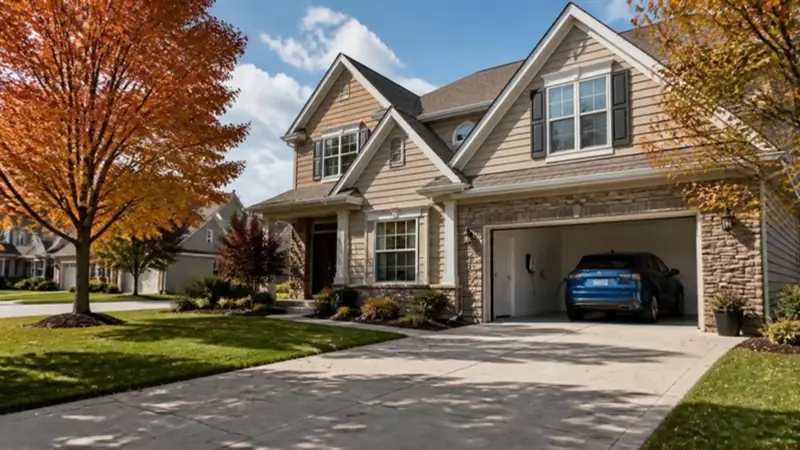
Pickerington, OH
South on SR 256 in Fairfield County, with city and Violet Township addresses.
EV chargers in Pickerington →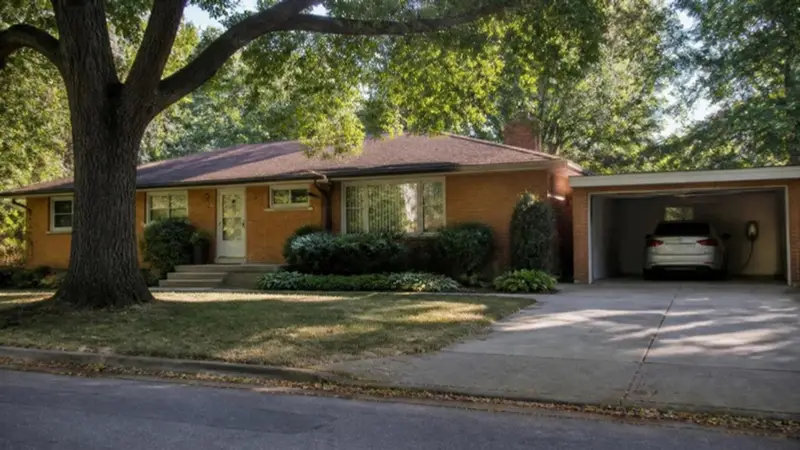
Gahanna, OH
North in Franklin County, from established homes to newer builds.
EV chargers in Gahanna →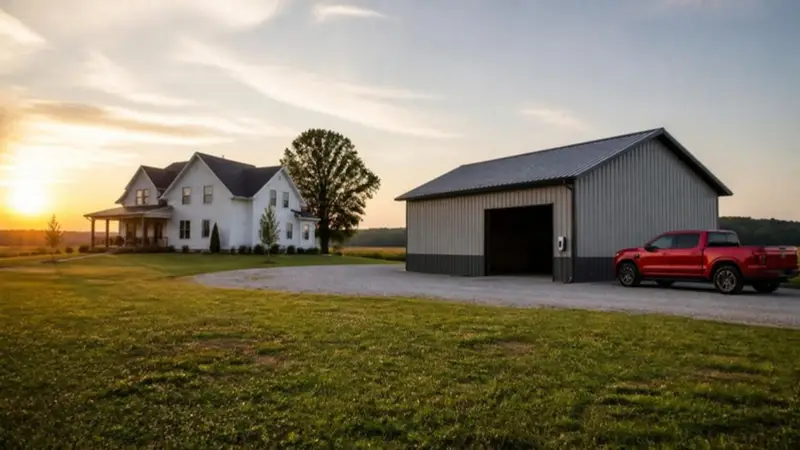
Pataskala, OH
East in Licking County, including detached garages and larger lots.
EV chargers in Pataskala →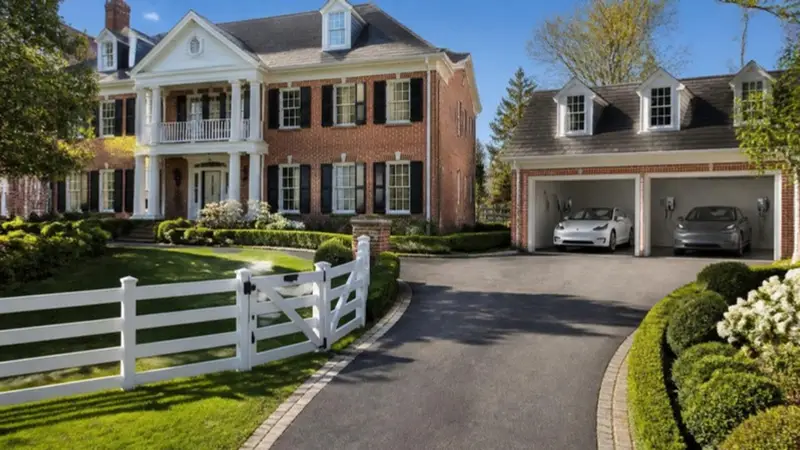
New Albany, OH
Northeast, with two-EV homes and workplace charging.
EV chargers in New Albany →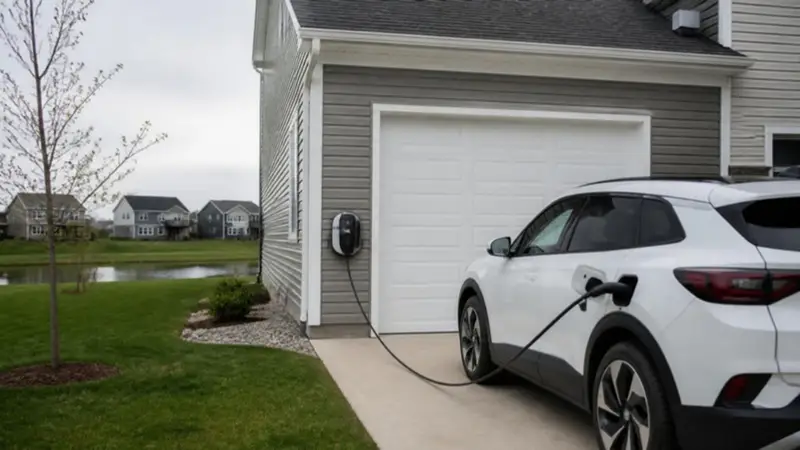
Blacklick, OH
Directly north in Jefferson Township (43004).
EV chargers in Blacklick →EV PROS Reynoldsburg Location
2506 Taylor Rd Ext, Reynoldsburg, OH 43068
Before You Install: Helpful Guides
Straight answers on cost, permits, breaker sizes and incentives, written for Reynoldsburg-area homeowners.
What Drives EV Charger Installation Cost in Ohio
The line items in a real quote, three common scenarios, and how to lower the price without cutting corners.
Read the guide →
Level 1 vs. Level 2 EV Charging: Which Do You Need?
Speeds, daily-mileage math, Ohio winters, and when a standard outlet is honestly enough.
Read the guide →Do You Need a Permit to Install an EV Charger in Ohio?
When a permit is required, who issues it around Reynoldsburg, and what the inspector checks.
Read the guide →Frequently Asked Questions About EV Charger Installation in Reynoldsburg, OH
Straight answers to what people ask most before they call. Still have a question? A local installer can walk you through it.
01How much does it cost to install an EV charger in Reynoldsburg?
It depends mostly on the distance from your electrical panel to the charger, whether your panel has room for a new 240-volt breaker, the charger's amperage, and permit fees. A short run next to a panel with spare capacity is the simplest job. Long runs, detached garages, trenching or a service upgrade add cost. Your installer can give you a written quote after reviewing your setup, often from photos of your panel. Our installation cost guide explains each line item.
02Do I need a permit to install an EV charger in Reynoldsburg, OH?
A new 240-volt circuit for an EV charger is electrical work that normally requires a permit and inspection. Inside Reynoldsburg city limits, the City of Reynoldsburg Building Department issues electrical permits. Addresses in nearby townships or cities are handled by the department with jurisdiction there. Your installer should pull the permit and schedule the inspection. See our Ohio EV charger permit guide.
03Is Level 1 charging enough, or do I need a Level 2 charger?
Level 1 uses a standard 120-volt outlet and typically adds only a few miles of range per hour, which can work for short commutes. Level 2 uses a 240-volt circuit and can add roughly 20–40+ miles of range per hour depending on the vehicle and charger, so most drivers who charge at home every night choose Level 2. Compare them in our Level 1 vs. Level 2 guide.
04Will I need an electrical panel upgrade?
Not always. An electrician will run a load calculation to see whether your existing service can support the charger. If it is close, options include a lower-amperage charger setting, a smart load management device, or a panel or service upgrade. See our panel upgrade and load management guide.
05Are there EV charger rebates or tax credits in Ohio right now?
The federal 30C credit for home and business charging equipment does not apply to equipment placed in service after June 30, 2026. Ohio does not currently offer a statewide charger tax credit. Some electric cooperatives and municipal utilities offer their own rebates, and AEP Ohio offers time-of-use rate options that can lower overnight charging costs. Check with your utility and a tax professional for current programs. Details are in our 2026 Ohio incentives update.
06How long does a home EV charger installation take?
A straightforward garage installation near the panel is often completed in a single visit. Jobs that involve long wire runs, trenching, or a panel or service upgrade take longer, and service upgrades may require coordination with AEP Ohio or your electric cooperative. Final timing also depends on permit and inspection scheduling.
Ready to plan your EV charger installation?
One call gets your project details to a local electrical contractor who installs EV chargers in Reynoldsburg and nearby communities.