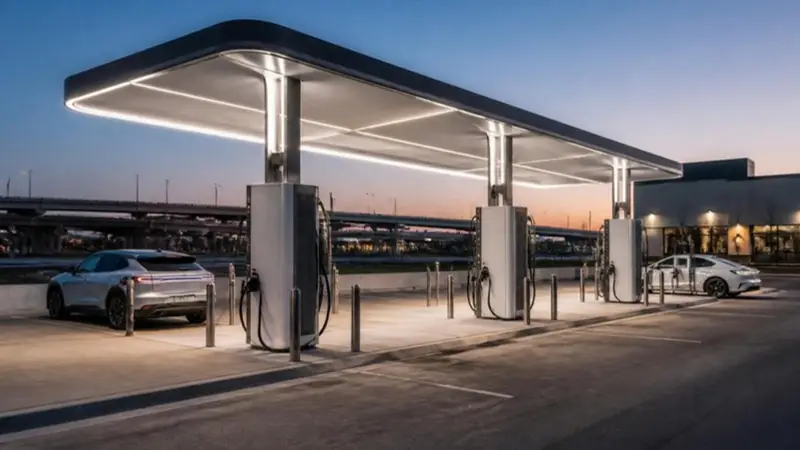
What Is a DC Fast Charger?
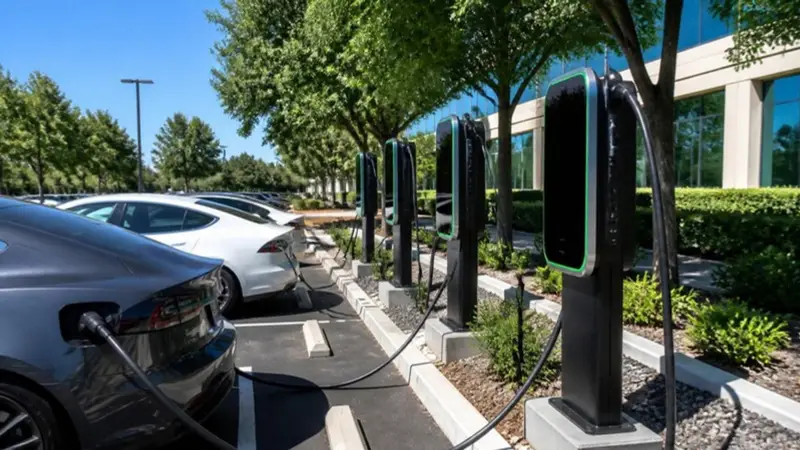
A DC fast charger, often called Level 3, converts high-voltage AC power to DC inside the station and delivers it directly to the vehicle's battery, bypassing the car's onboard charger. Output commonly ranges from about 50 kW to 350 kW or more, enough to add substantial range in well under an hour on compatible vehicles. Installation generally requires three-phase commercial power, frequently at 480 volts, and often new utility service or a transformer.
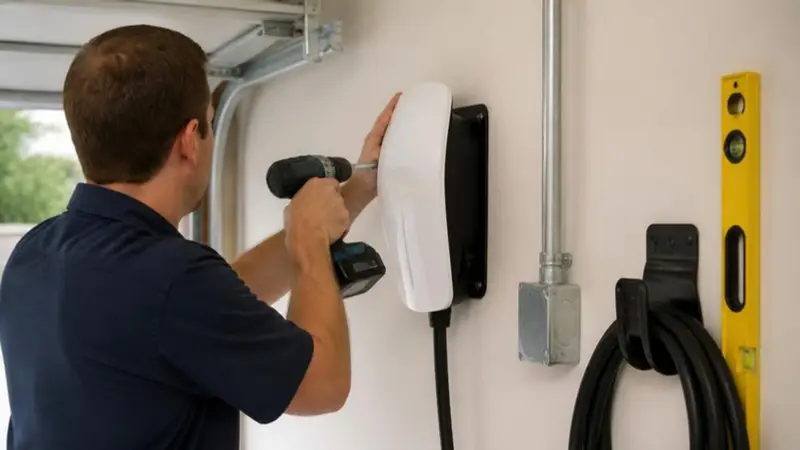
Because of that power requirement, DC fast charging is only practical at commercial sites. Homeowners researching EV charger installation in Reynoldsburg should look at Level 2 home chargers instead.
When DC Fast Charging Makes Sense
- Short-stay locations such as convenience stores, quick-service restaurants and travel stops where drivers stay 15–45 minutes
- Highway-adjacent sites, for example properties with easy access to I-70 on the east side of Columbus
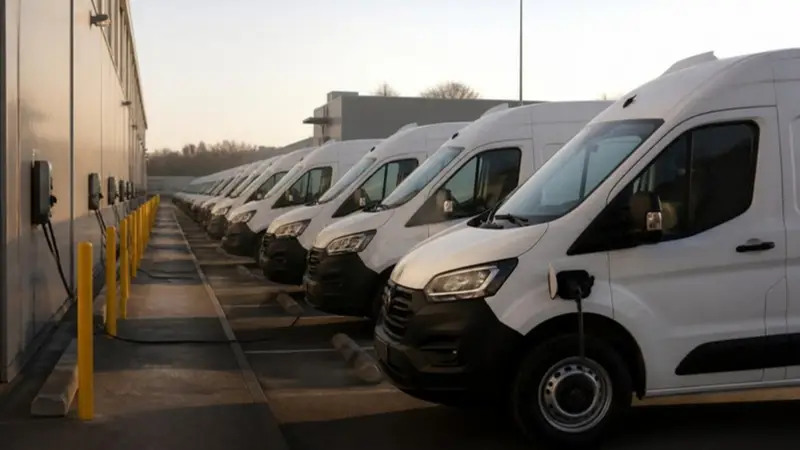
- Fleets with tight turnarounds that can't wait for overnight Level 2 charging (see fleet charging)
- Rideshare and delivery hubs where vehicles need quick top-ups between shifts
If vehicles park for two hours or more, commercial Level 2 stations usually deliver better value.
How a DC Fast Charger Project Unfolds
- Site feasibility. Review of the existing electrical service, available utility capacity, parking layout and traffic flow.
- Utility engagement. A service request to the utility, which may require a capacity study and new transformer or service. This is often the longest lead-time step.
- Design and engineering. Electrical drawings, equipment pads, conduit routing, protection and signage, plus accessibility considerations.
- Permitting. Electrical and building permits through the local jurisdiction, and zoning or site plan review where required.
- Construction. Trenching or boring, switchgear, concrete pads, bollards, conduit and conductor installation, and charger setting.
- Commissioning. Manufacturer or network start-up, payment system testing, and inspections.
Power, Transformers and Demand Charges
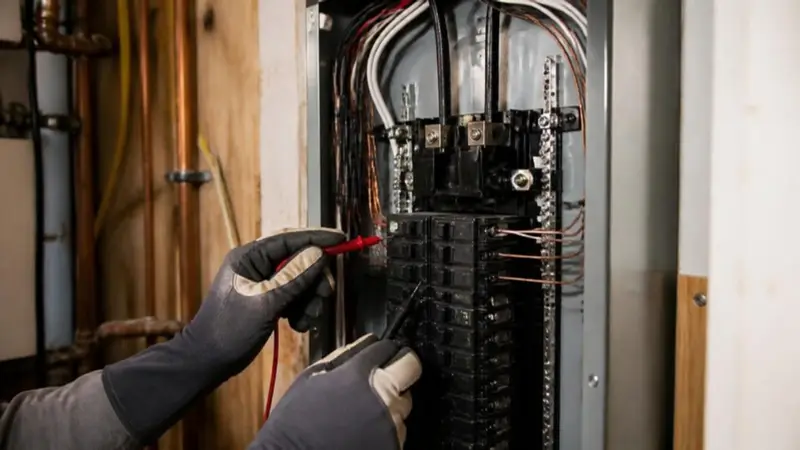
A single high-power charger can draw as much as a small commercial building. Many existing services can't support it without upgrades, so the utility conversation should start early. Much of the area is served by AEP Ohio, and your contractor will help prepare the service request.
Commercial rate structures may include demand charges based on your highest usage in a billing period. Fast chargers can create sharp peaks, so power management, lower-output settings and, at some sites, battery-buffered chargers are worth discussing with your contractor and equipment supplier.
Connectors: CCS1 and NACS
Many automakers are moving to NACS (SAE J3400), while a large share of current non-Tesla EVs use CCS1. New public DC fast charging installations often provide both connector types, or hardware that can be re-cabled later. If a grant or funding program is involved, confirm its connector and uptime requirements before choosing equipment.
Budgeting for Level 3 Installation
DC fast charging is a significant capital project. Costs depend on charger power and quantity, utility service and transformer work, distance from service to chargers, site construction, networking and payment hardware, and ongoing maintenance and software. We don't estimate prices because they vary so much by site. A contractor can only scope it after a site review and utility input. The federal 30C credit does not apply to equipment placed in service after June 30, 2026, so check current federal, state and utility programs with your advisor.
For businesses anywhere from Reynoldsburg to New Albany and Pataskala, local commercial contractors can review your site and utility options. For the overall picture of EV charging installation in Reynoldsburg, OH, start with our main guide.